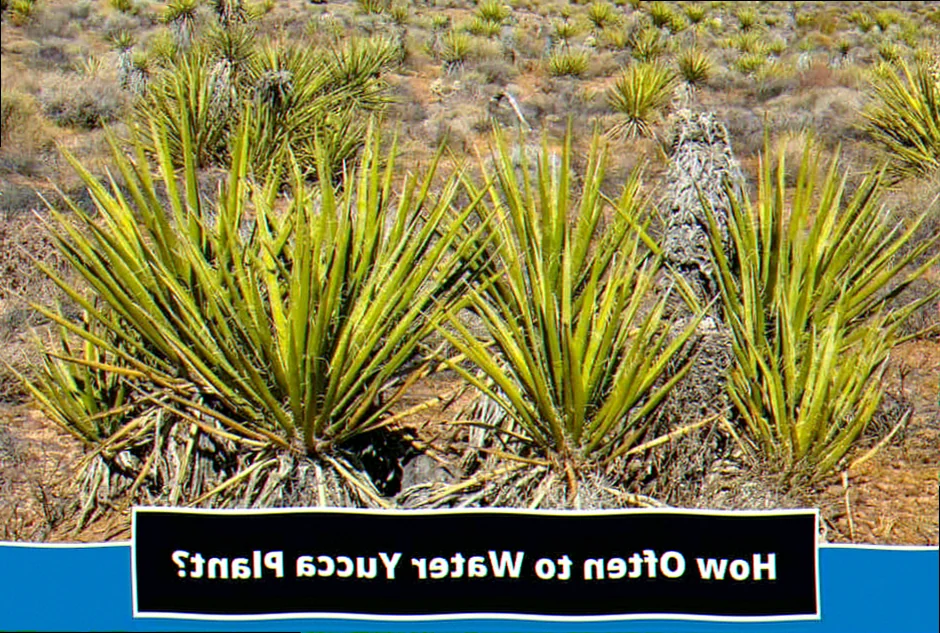
Did you know that some of the toughest plants on Earth, like the Yucca, can actually suffer more from too much love than too little? In a sun-drenched country like Australia, where water is a precious resource, understanding how to properly hydrate your Yucca isn't just about plant health - it's a lesson in sustainable gardening, echoing ancient wisdom of caring for arid landscapes.
Natural History Overview
| Category | Information |
|---|---|
| Scientific name | Yucca (a genus, common garden varieties include Yucca elephantipes, Y. gloriosa) |
| Common name variants | Spineless Yucca (Y. elephantipes), Spanish Dagger (Y. gloriosa), Joshua Tree (Y. brevifolia) |
| First described (year) | 1753 by Carl Linnaeus |
| Size and weight | Can grow up to 9 metres tall; individual plants can weigh several hundred kilograms. Leaves typically 30-100 cm long. |
| Longevity record | Some Yucca species (like the Joshua Tree) can live for over 300 years. |
What Makes Yucca Extraordinary
The Yucca's most remarkable adaptation, key to its survival in arid environments and directly influencing its watering needs, is its unique photosynthetic pathway: Crassulacean Acid Metabolism (CAM). Unlike most plants that open their stomata (pores) during the day to take in carbon dioxide, Yuccas, along with other succulents and cacti, open theirs predominantly at night. This allows them to absorb CO2 when temperatures are cooler and humidity is higher, significantly reducing water loss through transpiration. During the day, with stomata closed, they then convert the stored CO2 into sugars using sunlight. This physiological trick allows Yuccas to thrive on minimal water, making them incredibly efficient and resilient, and explaining why overwatering is such a common pitfall for their Australian owners.
Aboriginal and Torres Strait Islander Perspectives
It's important to acknowledge that the Yucca plant is not native to Australia; it originates from the arid and semi-arid regions of North and Central America. As such, it does not feature in the traditional lore, foodways, or land management practices of Aboriginal and Torres Strait Islander peoples. However, the profound Indigenous understanding of water cycles, plant indicators, and sustainable land management in Australia's diverse ecosystems offers invaluable lessons for all gardeners. For tens of thousands of years, First Nations Australians have practiced "Caring for Country," an holistic approach that includes precise knowledge of how native plants adapt to drought and flood, and how to manage water resources wisely. Learning to observe your local environment, the signs of the seasons, and the specific needs of your plants - whether native or introduced - aligns with the deep ecological wisdom that has sustained Indigenous cultures for millennia. This approach encourages a mindful relationship with water, understanding that it is a finite and precious resource, particularly in a dry continent.
Recent Scientific Discoveries (last 20 years)
- Discovery 1: In 2017, researchers published a significant study tracing the genetic evolution of CAM photosynthesis across Yucca and Agave species. This work, involving genomic sequencing, provided deeper insights into the specific genes and regulatory networks that enable these plants to switch their photosynthetic pathways, offering new targets for engineering drought resistance in other crops.
- Discovery 2: Recent investigations into the Yucca moth symbiosis have revealed even more intricate co-evolutionary details, including how specific Yucca species have developed chemical signals to attract their exclusive pollinator moths, and how the moths, in turn, have evolved complex behaviours to ensure pollination and larvae survival, highlighting the fragility and precision of these ancient relationships.
- Ongoing research: Scientists are currently exploring the potential of Yucca extracts in various fields, including medicine and agriculture. Its saponins (natural detergents) are being studied for anti-inflammatory and cholesterol-lowering properties, and as natural pesticides, continuing to unveil the plant's diverse chemical capabilities.
Life History and Ecology
- Diet: Yuccas are autotrophic, meaning they produce their own food through photosynthesis, primarily using the CAM pathway to conserve water.
- Habitat: Native to deserts, semi-deserts, prairies, and mountainous regions across North and Central America. In Australia, they are widely cultivated in gardens and as indoor plants, adapting well to a range of climates, particularly those with good drainage.
- Breeding: Yuccas typically flower in late spring to summer, producing tall flower stalks with bell-shaped, often fragrant, white or cream flowers. Most Yucca species are pollinated exclusively by specific Yucca moths, a classic example of obligate mutualism. The moth collects pollen, deposits it on the stigma, and then lays its eggs in the flower's ovary; the larvae feed on a small proportion of the developing seeds.
- Lifespan: In their native habitats, many Yucca species can live for decades to centuries. In cultivation, depending on species and care, they can live for 20-50 years or more, especially when given optimal conditions.
- Movement: Yuccas are sessile plants and do not move. Their seeds are dispersed locally by gravity or sometimes by animals, while their clonal offsets can expand the plant's footprint over time.
Conservation Status and Future Outlook
Most common garden Yucca species (like Yucca elephantipes and Y. gloriosa) are not listed as threatened under the IUCN Red List or Australia's EPBC Act. They are robust and widely cultivated. However, some rarer or geographically restricted Yucca species in their native ranges face threats from habitat loss, climate change, and invasive species. For example, the iconic Joshua Tree (Yucca brevifolia) is facing increasing pressure from wildfires and changing rainfall patterns in the American Southwest. An optimistic development is the increasing awareness among Australian gardeners about water-wise landscaping, which naturally favours drought-tolerant plants like Yuccas, reducing strain on precious water resources. An ongoing concern, however, is the potential for some Yucca species to become invasive if seeds are dispersed into natural Australian bushland, where they could outcompete native flora, though this is less common with cultivated varieties.
Myth-Busting: What People Get Wrong About Yucca Plants
Myth 1: Yuccas are "desert plants" so they never need water. Truth: While Yuccas are incredibly drought-tolerant, they do need water to survive and thrive. The misconception often leads to either extreme neglect or, more commonly, overwatering. They need less frequent watering than many other plants, but when they do get water, it should be a thorough drenching, allowing the soil to dry out completely between waterings.
Myth 2: Yellowing leaves on a Yucca mean it needs more water. Truth: In Yuccas, yellowing leaves are far more often a sign of overwatering or poor drainage, leading to root rot. Underwatering typically causes leaves to shrivel, brown, and become crispy, starting from the tips. If your Yucca's lower leaves are turning yellow and mushy, it's almost certainly getting too much water.
Questions People Ask
Is Yucca plant found only in Australia?
No, the Yucca plant is not native to Australia. Its natural range spans North and Central America, from the southwestern United States down through Mexico and into parts of